
xr:d:DAFRgHWldKw:61,j:3049335566563933360,t:23080402
Whitch Picth??
When I started music, I always heard these words:
“Perfect pitch” and “Relative pitch.”
Many people say perfect pitch is special. Like a superpower.
But after many years playing worship guitar, I have a different opinion.
Today I want to explain in simple way. From my experience.
What is Perfect Pitch?
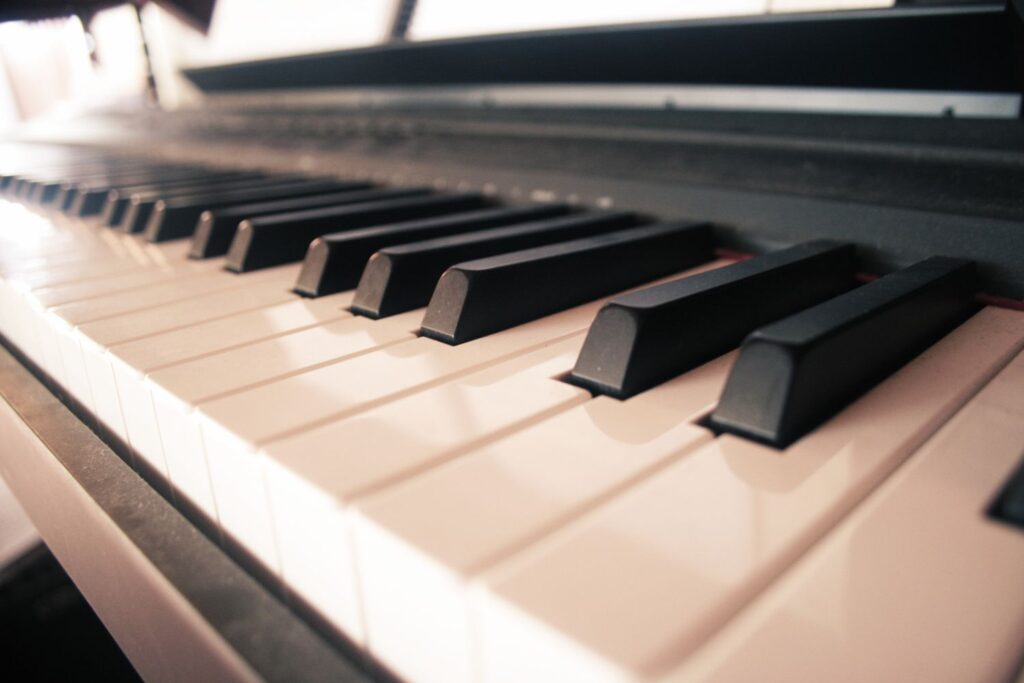
Perfect pitch means:
You hear a note, and you immediately know the name.
For example:
You hear piano key → You know “That is C.”
Always C. No reference needed.
In music theory, this is called Fixed Do.
It is usually trained when very young. Small child.
So yes, it is amazing ability.
If you will work mainly transcribing music or doing ear-copy jobs, this is a very strong and powerful skill. But there is a wall. If you don’t overcome it, this skill might become a bit limited.
Benefits:
- Fast ear training
- Fast transcription
- Easy to write music from listening
Why Perfect Pitch Has Its Limits
Most modern music uses:
A = 440Hz
But not always.
For example:
- Some orchestras use 443Hz or 444Hz
- Baroque music uses 415Hz
- Some people use 432Hz
Also, Western music uses 12 notes system.
But other cultures are different:
- Indian music has 22 microtones
- Balinese gamelan uses 5-note or 7-note systems
So if your brain is fixed to only one pitch system, sometimes it becomes confusing.
For pop music, frequency or scale differences usually don’t matter much.
But pop and jazz have lots of key changes. And in fixed Do, it’s hard to communicate quickly with a band when keys change.
Summary of Perfect Pitch:
Good:
- Fast transcription
- Accurate pitch naming
Weak:
- Harder to adapt different tuning systems
- Less flexible sometimes
- Weaker for key changes
What is Solfege?
Solfege is:
Do Re Mi Fa So La Ti Do
System to name notes with voice.
Example:
- Do
- Di (C sharp)
- Re
- Ri
- Mi
It is very efficient. Easy to sing.
I will make full pronunciation guide in future article.
The Most Important Skill: Relative Pitch (Movable Do)
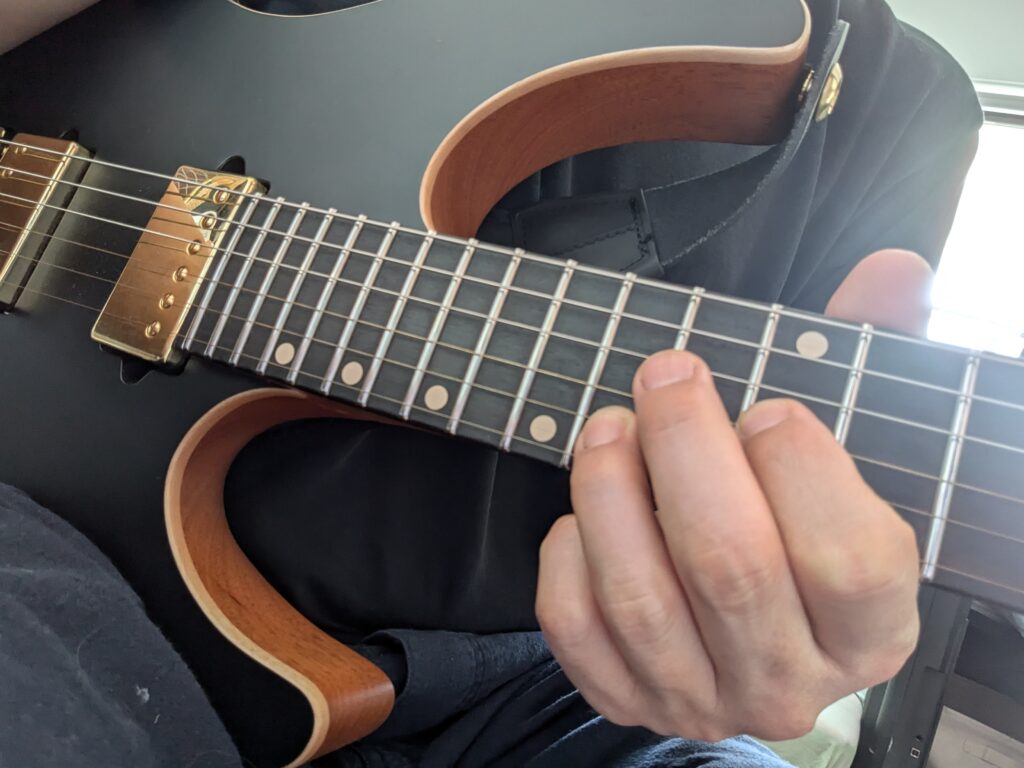
This is the most important skill for worship guitarists.
Relative pitch means:
You choose the root note.
That note becomes Do.
Then everything is relationship.
Example:
If key is G:
- G = Do
- A = Re
- B = Mi
If key is C:
- C = Do
- D = Re
- E = Mi
Do moves.
That is why called Movable Do.
This means:
You understand music by intervals.
Numbers.
- Do = 1
- Re = 2
- Mi = 3
This is powerful.
Very powerful.
It’s strong for key changes.
You can understand chords as numbers using Nashville Number System (Imaj7, IImin7, IIImin7, IV△7…) so band communication becomes super smooth.
In live settings, sometimes you get chord signals with just hand signs. I will write a full article about this too.
This Changes Your Guitar Playing Completely
When relative pitch develops, something amazing happens.
You hear melody…
And your fingers already know where to go.
No thinking.
No searching.
Just playing.
This is real freedom.
Especially in worship.
Because keys change often.
Singer changes key suddenly.
Pastor says:
“Let’s do it in B instead.”
No problem.
You can still play.
The Best News: Anyone Can Learn Relative Pitch
Perfect pitch → must learn as child
Relative pitch → you can learn anytime
This is great news.
Here is simple training:
Step 1
Choose your favorite song
Step 2
Sing melody using Do Re Mi
Not lyrics.
Do Re Mi.
Step 3
Record yourself
Step 4
Listen many times
Especially:
- Before sleep
- Just after waking up
This helps brain deeply.
Most popular songs use Major scale.
Start there.
Major scale is foundation.
Always.
Then Connect Voice to Guitar
After you can sing Do Re Mi…
Next step:
Find those notes on guitar.
Connect:
Ear → Voice → Guitar
This creates synchronization.
At first, it is slow.
Boring sometimes.
But one day…
Suddenly everything opens.
I experienced this.
Guitar becomes easier.
Much easier.
The Big Benefits You Will Get
When relative pitch grows:
- You know song key quickly
- You stop looking at fretboard too much
- You understand chord numbers
- You can use Nashville Number System
- You communicate better with band
This is huge skill in worship music.
Beyond the TAB
TAB is great for fast practice. But on stage, we rarely use it.
Real charts are rhythm charts with sections (intro, chorus repeats) or sheet music.
My rule: don’t rely on TAB too much. But… I still use them sometimes, haha. They are fast. And my TAB video channel is doing well.
Check out my worship guitar TAB channel here:
Nino Worship Electric Guitar Solo
Final Thoughts
Perfect pitch is nice.
But relative pitch is freedom.
And freedom is more important.
Especially for worship musicians.
Because worship is not about perfection.
It is about connection.
Connection to music.
Connection to people.
Connection to God.
If you are interested, I will write next article:
How I use relative pitch in real worship stage.
Real situation.
Real examples.
Thank you for reading.
— Nino